6 A/B Tests You Should Run to Improve Your Services' Email Marketing
9 min read
Most small and medium-sized business owners struggle with one big question: What will actually make my customers buy? You tweak your website, adjust your pricing, and experiment with ads - but without real data, it’s just guesswork.
A/B testing eliminates the guesswork by showing what actually works. It helps you make data-backed decisions that can increase sales without blindly spending more on marketing.
But not all A/B tests are worth your time. Some bring marginal results, while others can significantly impact your bottom line. In this post, we’ll break down six A/B tests that every SMB should run to optimize conversions, reduce cart abandonment, and turn more visitors into paying customers.
A/B Testing and Its Role in Sales Optimization
What is A/B Testing?
Most businesses are shooting in the dark when it comes to their sales pages. They build something that "looks good" and pray it converts. That's a recipe for mediocre results at best.
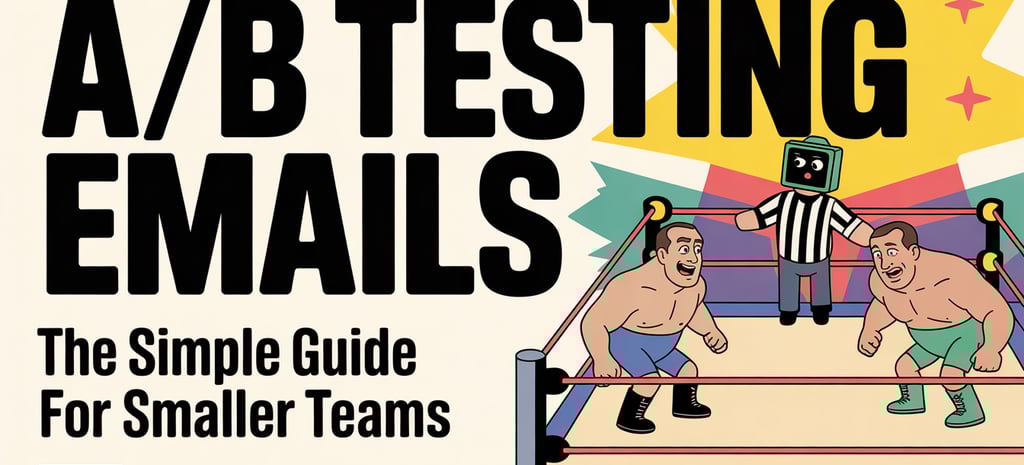
A/B testing cuts through the noise. It's dead simple: you create two versions of something – could be your landing page, your email subject line, or that sales button nobody seems to click. Version A might have a red button, Version B a green one. Then you split your traffic between them and see which one actually performs.
So many SMBs make the mistake of redesigning their entire website based on a whim or by looking blindly at what their competitor is doing. Then they wonder why sales haven't improved. A/B testing slices through that paralysis. It replaces "I think" with "I know." Instead of guessing which strategy to implement, you have evidence pointing you in the right direction.
Your gut feeling isn't reliable. Neither is your designer's preference. Or what worked for some other business. Most SMBs feel paralyzed by uncertainty:
"Should we change our pricing display?"
"Is our call-to-action strong enough?"
"Why aren't people completing checkout?"
The Key Areas to Test for Maximum Impact
Not all A/B tests deliver the same results. Some have a minimal effect, while others can drive a noticeable increase in sales. To get the most out of your efforts, focus on areas that directly influence customer decisions.
Test 1: Product Page Layout and Design
Your product page is where customers decide whether to buy or leave. Small changes in layout can make a big difference in conversion rates.
What to Test
Try different arrangements for product images, descriptions, and the placement of the "Add to Cart" button. Some layouts may highlight key selling points better, while others might make the page easier to navigate.
Why it Matters
Even minor design tweaks can impact user behavior. A more intuitive layout can increase engagement, reduce hesitation, and improve conversions.
Pain Point Addressed
Many SMBs don’t know what an optimized product page looks like. A/B testing helps identify the most effective design instead of relying on guesswork.
Test 2: Call to Action (CTA) Buttons
Your CTA button is one of the most critical elements on a sales page. If it’s unclear or unappealing, potential buyers may hesitate or leave altogether.
What to Test: Experiment with different CTA text, colors, sizes, and placements. A simple wording change from “Buy Now” to “Get Yours Today” can shift how customers respond. A brighter color or a larger button might make it stand out more.
Why it Matters: The CTA is often the last step before conversion. A well-optimized button can push hesitant buyers over the edge and directly impact sales.
Pain Point Addressed: Many SMB owners struggle with weak or ineffective CTA buttons. Testing different versions provides clarity on what drives action and leads to more consistent conversions.
Testing Other Crucial Elements That Affect Sales
Test 3: Pricing Strategies
What to Test:
Forget what you think you know about pricing. Most SMBs pick price points based on competitors or gut feeling - both terrible strategies. Test different models aggressively: slash prices by 20%, try premium pricing, bundle your core product with add-ons, or introduce three-tier pricing structures where the middle option suddenly looks like a steal.
Why it Matters:
Let's get real - pricing isn't just about numbers. It's psychological warfare. A $97 product suddenly priced at $197 might actually sell better because it signals higher value. Or your $497 service repackaged as a $47/month subscription could unlock an entirely different customer segment. The right pricing strategy can transform a struggling product into your cash cow.
Painpoint Addressed:
Most SMBs are absolutely terrified of pricing experiments. They set prices once and never touch them again, leaving piles of money on the table. Testing eliminates the fear. When data shows your premium pricing tier outperforms your budget option by 3x profit margin while maintaining volume, suddenly those pricing decisions become no-brainers instead of nerve-wracking gambles.
Test 4: Email Subject Lines and Content
What to Test:
Your brilliant email campaign is worthless if nobody opens it. Test subject lines that create urgency ("Last chance: Offer expires tonight") against curiosity gaps ("The mistake costing you customers"). Test personalized first names versus industry-specific hooks. Then dive deeper - test plain-text emails against fancy HTML, long-form stories against bullet-point quick reads, and soft-sell approaches against direct calls to action.
Why it Matters:
Email marketing is like having a direct line to your prospect's brain - if they actually open and read what you send. A subject line tweak can double your open rates overnight. Changing your CTA button from "Learn More" to "Fix My Sales Problem" could triple your click-through. These aren't minor optimizations - they're the difference between campaigns that print money and campaigns that waste it.
Painpoint Addressed:
The average SMB sends the same tired email templates and wonders why their open rates hover around 12%. They have no idea if their messaging resonates or repels. A/B testing cuts through the confusion. When you see Subject Line B consistently outperforming A by 35%, or email format C driving 3x more sales than format D, you stop guessing and start growing.
Test 5: Landing Page Variations
Your landing page is often the first thing potential customers see. If it doesn’t grab attention or build trust fast, they’ll leave.
What to Test: Run A/B tests on different headlines, copy, imagery, and form layouts. Some customers may respond better to a benefit-driven headline, while others might prefer a more direct approach.
Why it Matters: A well-crafted landing page can be the difference between a bounce and a conversion. Testing helps identify the most compelling elements so you can maximize engagement.
Pain Point Addressed: Many SMBs struggle with low conversion rates on their landing pages. A/B testing removes the guesswork and reveals what actually resonates with visitors.
Test 6: Checkout Process Simplification
A potential customer reaching checkout doesn’t guarantee a sale. A frustrating or overly complex process can drive them away at the last minute.
What to Test: Experiment with reducing the number of steps, offering a guest checkout option, or improving how payment methods are displayed. Even something as simple as auto-filling address fields can make a difference.
Why it Matters: A lengthy or complicated checkout is one of the biggest reasons for cart abandonment. Streamlining the process makes it easier for customers to complete their purchase.
Pain Point Addressed: Many SMBs lose sales at the last step. Testing different checkout experiences helps identify barriers and eliminate friction, leading to higher conversion rates.
How to Set Up and Execute Effective A/B Tests
Setting Clear Objectives
Before diving into A/B testing, you need to establish specific goals that directly impact your business outcomes. Vague aspirations won't cut it - your objectives should be concrete and measurable.
Strong objectives for A/B testing include:
Increasing email signup conversion from 2% to 5%
Reducing shopping cart abandonment from 70% to 50%
Boosting click-through rates on your primary CTA by 25%
Having well-defined objectives serves as your guiding principle throughout the testing process. Without this clarity, you might find yourself testing elements that don't meaningfully contribute to your business goals, wasting valuable time and resources.
Sample Size and Statistical Significance
This is where many small and medium businesses stumble in their testing efforts. Running tests without proper sample sizes or ending them prematurely can lead to misleading conclusions.
To ensure your A/B tests deliver reliable insights:
Calculate the minimum sample size required before starting your test - various online calculators can help determine this based on your current conversion rates and desired confidence level
Allow your test to run its complete duration, even when early results seem promising
Target at least 95% statistical significance, which means there's only a 5% probability your results occurred by chance
Focus on testing one variable at a time - when you change multiple elements, you won't know which specific change drove the results
For businesses with lower traffic volumes, patience becomes especially important. With fewer daily visitors, reaching statistical significance will take longer than for high-traffic sites. Rather than seeing this as a limitation, use it as motivation to be strategic about which elements you prioritize for testing.
Making A/B Testing Accessible
Many small businesses perceive A/B testing as complex or resource-intensive, but it doesn't have to be. At its core, A/B testing is simply a methodical approach to improving your digital presence through incremental, data-driven changes.
Start with straightforward tests that address obvious pain points in your user journey. As you become more comfortable with the process, you can gradually tackle more sophisticated experiments.
Analyzing Results and Making Data-Driven Decisions
Running A/B tests is only half the battle. The real value comes from understanding the results and using them to make informed decisions that drive sales. Without proper analysis, even the most well-run test is just data sitting in a spreadsheet.
Interpreting Test Results
Once your test has run long enough to gather significant data, the next step is figuring out what it actually means.
Identify the winning variation: Look at the key metrics - conversion rates, click-through rates, bounce rates, or average order value. Which version performed better, and by how much?
Understand why it won: A higher conversion rate isn’t enough. What specific element made the difference? Was it a clearer CTA, a more engaging headline, or a streamlined checkout process?
Check for statistical significance: A small increase might not be meaningful. Use tools like Google Optimize or Optimizely to confirm that the results are reliable and not just due to chance.
Common SMB Challenge: Many business owners see a winning test but don’t know how to apply the insights beyond that single change. The key is learning from the data and applying those lessons across your marketing strategy.
Making Actionable Adjustments
Once you know what works, put it into action. Here’s how:
Adopting new designs: If a product page layout with larger images outperformed another, update all product pages to match.
Refining pricing strategies: If a discount offer boosted conversions, consider integrating it permanently or testing different discount levels.
Optimizing email campaigns: If a specific subject line increased open rates, use that style for future emails and test further refinements.
Tweaking ad creatives: If an ad with a customer testimonial got more clicks, incorporate more social proof across other marketing materials.
Data-driven decisions don’t stop at a single test. Each result is an opportunity to improve other areas of your business - from website design to ad copy to pricing structures.
Pain Point Addressed
Many SMBs feel overwhelmed when it comes to analyzing test results. It’s easy to run a test but harder to turn data into action. By following a structured approach, you can confidently make changes that lead to real growth, not just random tweaks.
Best Practices and Pitfalls to Avoid in A/B Testing
A/B testing can drive real improvements, but only if done correctly. Many SMBs rush through the process, making changes based on incomplete or misleading data. To get reliable results, it’s essential to follow best practices and avoid common mistakes.
Best Practices for Effective A/B Testing
Test one variable at a time: If you change multiple elements at once, you won’t know which one caused the difference. Isolate variables to get clear insights.
Let tests run long enough: Stopping a test too early can lead to misleading conclusions. Use statistical significance calculators to confirm whether a result is valid.
Track a single key metric: Whether it’s conversion rate, click-through rate, or average order value, focus on one metric per test. Trying to track too many can make the results unclear.
Common Pitfalls to Avoid
Testing too many elements at once: Changing headlines, images, and CTAs all at the same time creates confusion. Stick to one change per test.
Making decisions too soon: A spike in conversions after a day doesn’t mean the test is done. Give it enough time to account for fluctuations in traffic and behavior.
Not testing enough variations: If you only test one alternative, you may miss out on a better-performing option. Consider running multiple variations over time to find the best-performing one.
There you have it - six A/B tests that can transform your sales performance when done right. But knowing what to test is only half the battle.
The businesses that pull ahead aren't necessarily the ones with the biggest budgets or the fanciest tools. They're the ones that commit to continuous testing and improvement, making decisions based on real data rather than hunches or industry trends.
Begin with one test that addresses your most pressing conversion challenge. Follow the process, trust the numbers, and implement what works. Then move to the next test. This methodical approach might not seem glamorous, but it's how sustainable growth happens.
Remember that A/B testing isn't a one-time project - it's an ongoing practice that should become part of your business culture. The digital landscape and customer preferences evolve constantly, and yesterday's winning variation might underperform tomorrow.
Your competitors are likely leaving optimization opportunities on the table. By developing a systematic approach to A/B testing, you're not just improving individual metrics - you're building a sustainable competitive advantage that compounds over time.
What will you test first?
Stop Guessing Where Your Next Client Will Come From
With the right funnel in place, leads stop slipping through the cracks. You focus on serving clients, while your system brings in new ones.
info@clicksnthings.com
© 2025. All rights reserved.
clicksnthings@gmail.com